
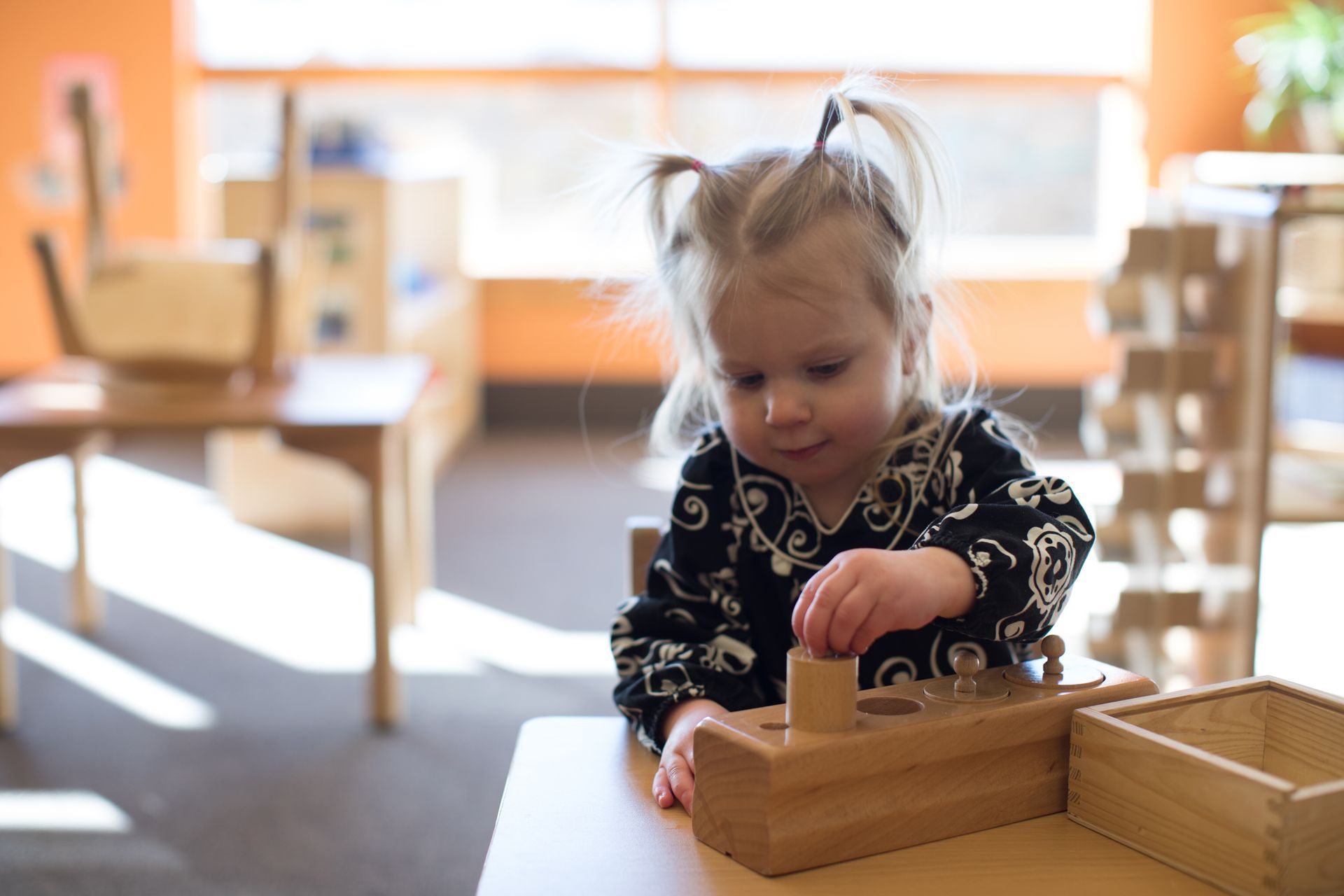
Unlike other species born with a predetermined set of behaviors, human babies are born with a vast set of latent potentials. When a child enters the world, we cannot predict if they will become a master musician, a gifted scientist, or a creative chef. It is an extraordinary reality to consider: during the first six years of life, children are actively constructing the foundational cognitive and physical skills they will use for the rest of their lives.
Dr. Maria Montessori observed children through a rigorous, scientific lens. Over time, she concluded that this profound creative work could only happen through a mind that operates fundamentally differently from the conscious, adult mind. In her seminal work, The Absorbent Mind, she observed:
“The child has other powers than ours, and the creation he achieves is no small one; it is everything. Not only does he create his language, but he shapes the organs that enable him to frame the words... This wonderful work is not the product of conscious intention.”
Long before modern neuroimaging could map early childhood brain plasticity, Dr. Montessori discovered how young brains function. She termed this unique period of mental development the absorbent mind.
Impressions That Form the Mind
The word absorbent implies taking in information and integrating it into the whole. What is absorbed becomes a permanent part of the child's psychic architecture. Children do not merely remember their experiences; they embody them.
As Dr. Montessori wrote, impressions "incarnate themselves in him. The child creates his own ‘mental muscles,’ using for this what he finds in the world about him.”
From birth until around age six, this capacity serves as a developmental superpower. However, because children absorb everything in their environment indiscriminately, they take in the imperfect details just as effortlessly as the beautiful ones. Therefore, our daily actions as adults must consistently reflect the behaviors we wish to see.
If we want children to sit gracefully at the table during meals, we must sit gracefully at the table. If we want them to use quiet, calm voices, we must model that exact modulation. Children are always observing, translating our everyday movements into their inner reality.
The Power of Modeling in the Prepared Environment
In our Toddler and Primary classrooms at Crabapple Montessori School, our guides are meticulously trained to move and speak with deep intention.
Consider a classic Montessori example: a guide who is quite tall routinely squatted down in front of a low shelf to carefully select a material. Within weeks, the guide noticed that the toddlers in the class—who were already at the perfect height to reach the shelf naturally—would walk over, deliberately squat down, and only then pick up the material. Even though the extra movement required more physical effort, they had unconsciously absorbed the exact sequence of the adult’s behavior.
Because of this intense sensitivity, our faculty lives by the same classroom grace and courtesy guidelines that we offer the children. When a guide prepares a snack, they wash their hands, use a plate, and sit at the communal table.
This practice of "living the environment" also serves as a continuous internal audit for our staff. By experiencing the classroom workflows ourselves, we can constantly refine the space:
- Are the child-sized dustpans truly intuitive for a young child to access?
- Do the spray bottles function smoothly for little hands wiping a table?
- Where does the physical flow of the room feel seamless, and where does it cause friction?
Viewing the World from the Child's Vantage Point
We frequently encourage parents to try a simple exercise at home: kneel or sit directly on the floor and look at your living space from your child's physical height.
What is visible from that vantage point? Is the room welcoming, orderly, and beautifully arranged, or is it visually overwhelming? What elements naturally attract a child's attention?
A young child's brain is biologically hardwired to effortlessly absorb their surroundings. Because our children possess such immense potential, our role as parents and educators is to provide them with the highest quality environment possible—one filled with clarity, consistency, and respect.
Discover the Montessori Difference
The unique mechanics of the absorbent mind are best understood when witnessed in real time.
We invite you to see how our intentionally prepared classrooms and expert guides support children as they construct their personalities and capabilities.