In Montessori education, we emphasize community not just as an abstract concept, but as a lived daily experience. From a child’s very first days in our prepared environments, we focus on fostering a deep, tangible sense of belonging and connection.
When families join Crabapple Montessori School, they are not just enrolling their child in a program; they are becoming part of a supportive ecosystem dedicated to natural development.
What is Community?
The word community comes from the Latin communis, meaning “common, public, general, or shared by all or many.” While a community certainly shares physical spaces—like our light-filled classrooms and beautiful outdoor environment—in the Montessori tradition, we define it by a shared sense of meaning, values, and connection.
At its core, community begins with the most fundamental human group: the family. Families form a child’s first social experience and the primary foundation where values, culture, and expectations are nurtured.
Partnering with Families
We deeply honor and respect each family's unique values, striving to foster strong home-school relationships. Our partnership with our parents is a mutual journey—one in which the adult caregivers at school and at home come together with a singular, shared purpose: to nurture the child’s natural growth.
Through regular communication, parent education opportunities, and shared milestones, we work to ensure that the transition between home and school feels seamless, secure, and respectful.
Building the Toddler & Primary Communities
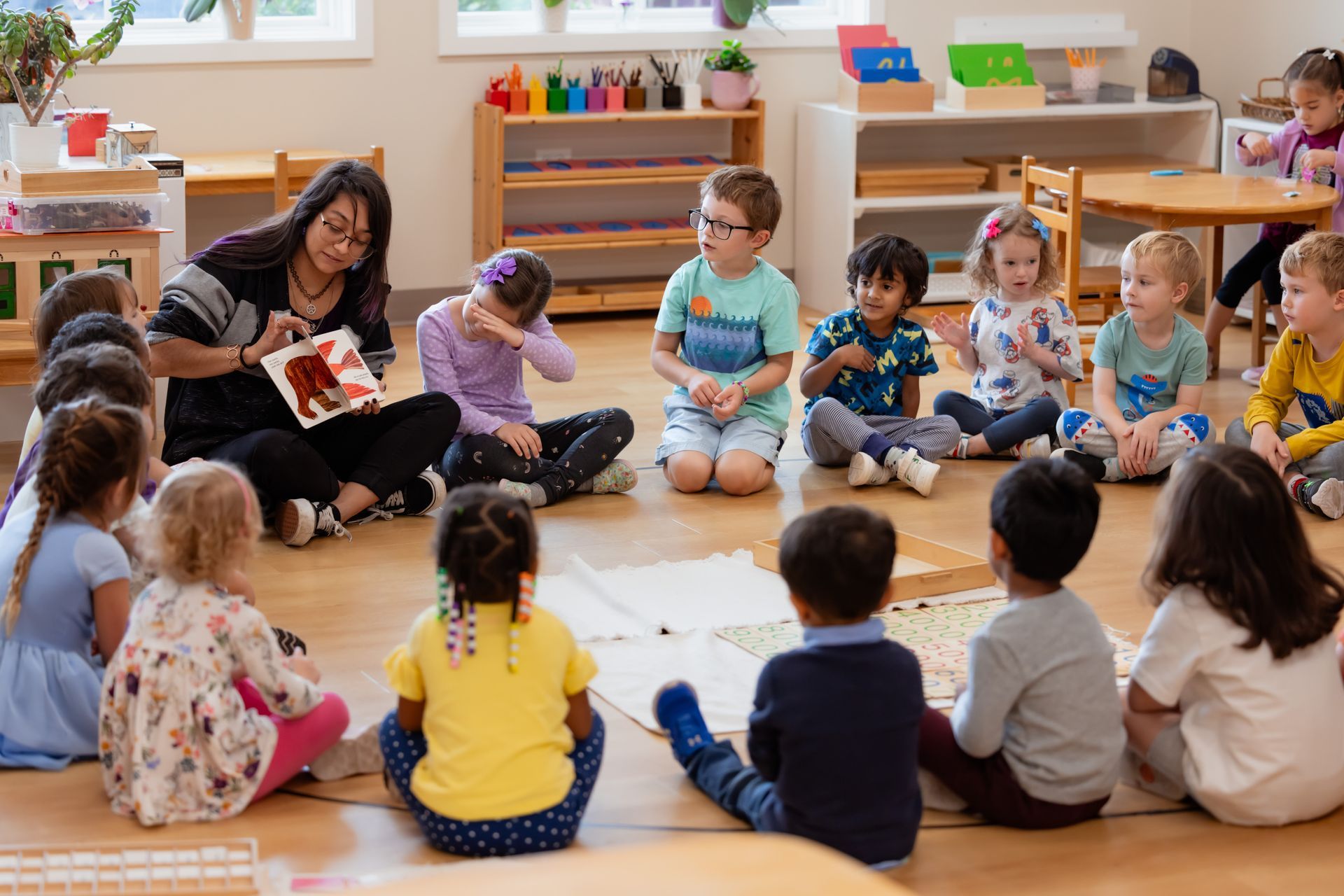
We intentionally design our learning environments—both indoors and outdoors—to meet each child exactly where they are developmentally, providing just the right balance of challenge, comfort, and beauty. In creating a functional community for young children, we focus on essential, concrete elements:
- The Prepared Adults: Our lead guides and trained assistants focus deeply on personal and professional preparation. Their role is not to lecture or direct, but to observe and support natural development with presence, purpose, and peacefulness.
- The Intentionally Designed Space: The physical classroom must be appropriately sized, thoughtfully arranged, and aesthetically pleasing. If a space is too large, children can feel lost or overstimulated; if it is too small, they may feel crowded and unsettled. Every detail—from the low shelves to the height of the tables—is designed with intention.
- The Purposeful Materials: Everything in a Crabapple classroom is developmentally appropriate, beautiful, and in harmony with Montessori principles. Materials are meticulously selected to support movement, independence, concentration, and a child's natural sense of order.
- The Power of External Order: Children have a fundamental psychological need for order, particularly during the first six years of life. External order—seen in consistent daily routines, predictable expectations, and a well-organized space—helps children form the inner order necessary for emotional regulation, concentration, and autonomy.
When children experience consistency, they do not have to expend energy trying to navigate chaos. Instead, that energy is fully directed toward self-construction, learning, and discovery.
The Role of the Guide as a Facilitator
Our guides practice the precise art of observation. This enables us to identify exactly what a child needs to aid their growth at any given moment. With a deep understanding of the purpose behind every material, we connect children to meaningful work through intentional and respectful presentations.
We practice humility, recognizing that children are often more in tune with their developmental needs than adults are. This requires us to respect each child’s immense potential, meet behavioral challenges with grace, and offer the steady guidance they need to navigate social dynamics independently.
A Living, Breathing Community
Creating a Montessori community is both an art and a science. It requires intentional environments, well-prepared adults, and a deep respect for the child’s developmental journey.
At its heart, the classroom community at Crabapple Montessori School is a shared space where children learn how to be in the world—together. It is here they first experience what it means to belong, to contribute, and to grow alongside others.
See Our Community in Action
The best way to truly understand the warmth, order, and independence of a Montessori environment is to see it firsthand. We invite prospective families to
schedule a campus tour, observe our classrooms, and meet our dedicated leadership team and guides.