
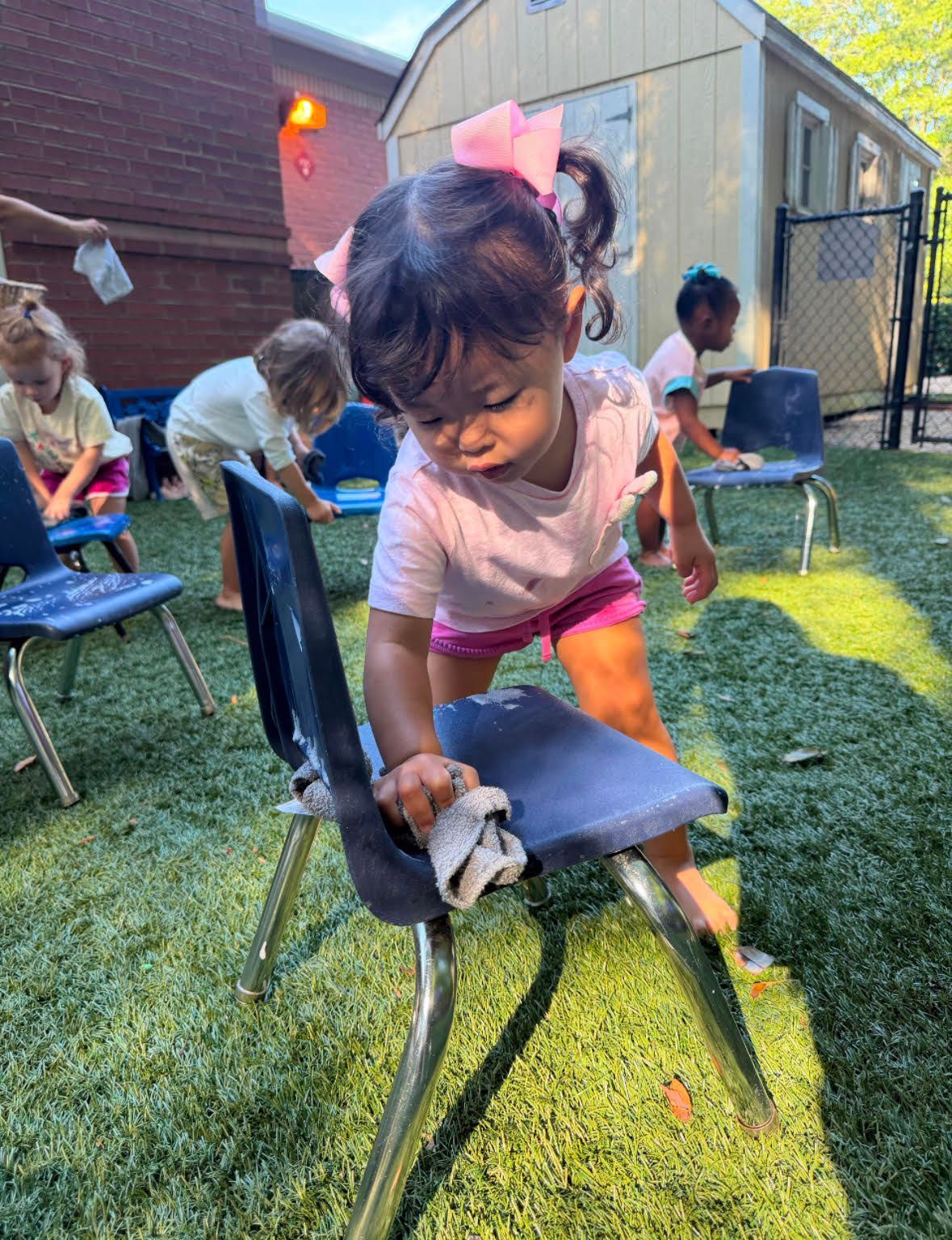
For a child between 18 months and 3 years old, movement is never an "extra" activity or just a way to burn off extra energy. In the toddler years, movement is the primary way children build their physical strength, organize their developing minds, and learn how to navigate the world around them.
In our Toddler Program at Crabapple Montessori School, we often talk about the concept of purposeful movement. Whether a child is carrying a pitcher of water across the classroom, returning a heavy working mat, or climbing our outdoor structures, movement is directly linked to their cognitive growth, emotional regulation, and self-confidence.
When we prepare a movement-rich environment for toddlers, we communicate a powerful message: Your body is capable. You are trusted. You belong here.
Freedom Within Limits: How Toddlers Learn Through Movement
As young children enter the toddler stage, their physical capabilities expand rapidly—and so does their desire for autonomy. A well-prepared Montessori toddler environment balances the freedom to move with clear, respectful boundaries.
Toddlers naturally test what their bodies can do while simultaneously learning how to participate in a classroom community. In our Toddler classrooms, clear, consistent expectations support this natural learning process:
- We walk inside the classroom so our friends stay safe.
- We carry our glass with two hands.
- The outdoor area is where we practice climbing.
Rather than acting as restrictions, these clear limits are what make true independence possible. When toddlers understand the boundaries of their space, they can move freely, choose their own work, and explore with confidence.
The Vital Role of the Montessori Toddler Guide
In a Montessori toddler classroom, the physical layout is only half of the equation; the adult presence is equally vital. Toddlers live in a world of rapid transitions—one moment eager to show complete independence, and the next seeking comfort and reassurance.
Our CMS Guides prepare themselves to support these developmental shifts with patience and observation:
- Intentional, Calm Presence: Toddlers absorb the energy around them. Our Guides model slow, intentional movements and speak in calm, clear tones, giving toddlers something grounded to absorb.
- Neutral, Precise Naming: Language is tied directly to physical action. Instead of generic praise, Guides use objective language: "You carried that heavy bucket all the way to the garden bed," or "You put your shoe on by yourself."
- Navigating Big Emotions Around Movement: Power struggles often surface when a toddler's desire to move collides with a boundary. Rather than trying to control a child’s body, our Guides remain steady, offer simple choices, and validate their feelings while holding safety limits firm.
How to Support Purposeful Toddler Movement at Home
You do not need specialized gym equipment or a vast space to support your toddler's natural drive to move at home. What matters most is intention, simplicity, and trust in your child’s timeline.
1. Create Clear, Uncluttered Walkways
Select a consistent area in your home where your toddler can move without constant redirection. Clear away unnecessary floor clutter and low visual distractions so your child can focus on spatial awareness, balance, and coordination. Ensure the space offers safe opportunities for walking, squatting, carrying, and pushing.
2. Offer Purposeful "Heavy Work"
Toddlers love tasks that challenge their physical strength. Instead of passive toys, offer opportunities for functional, purposeful movement around the house:
- Carrying a small basket of laundry to the bedroom
- Pushing a small wagon filled with books or blocks
- Carrying a small wooden tray during meal setup
- Lifting and placing heavy wooden blocks during play
3. Set Simple, Predictable Boundaries
Freedom thrives when limits are clear and unchanging. Decide ahead of time what is allowed in your home spaces and hold those boundaries with calm consistency. When toddlers know exactly where they are allowed to climb, run, or throw, they spend less energy testing limits and more time engaged in deep concentration.
4. Embrace the Outdoor Environment
Movement is intimately connected to nature. Make time daily for unstructured outdoor movement—walking on uneven grass, stepping over tree roots, balancing on landscape logs, or watching the wind in the trees. These natural sensory experiences help organize a toddler's nervous system and promote peaceful rest later in the day.
Experience Our Toddler Environments in Person
In our prepared Toddler classrooms and expansive outdoor spaces at Crabapple Montessori School, physical movement is integrated into every aspect of the morning cycle. The result is a community of calm, capable, and confident young children who take genuine joy in what their bodies can accomplish.
Interested in seeing how our Toddler Program supports your child's natural development?
We invite local Alpharetta families to
tour our campus, observe our toddler environments in action, and speak with our admissions team.