
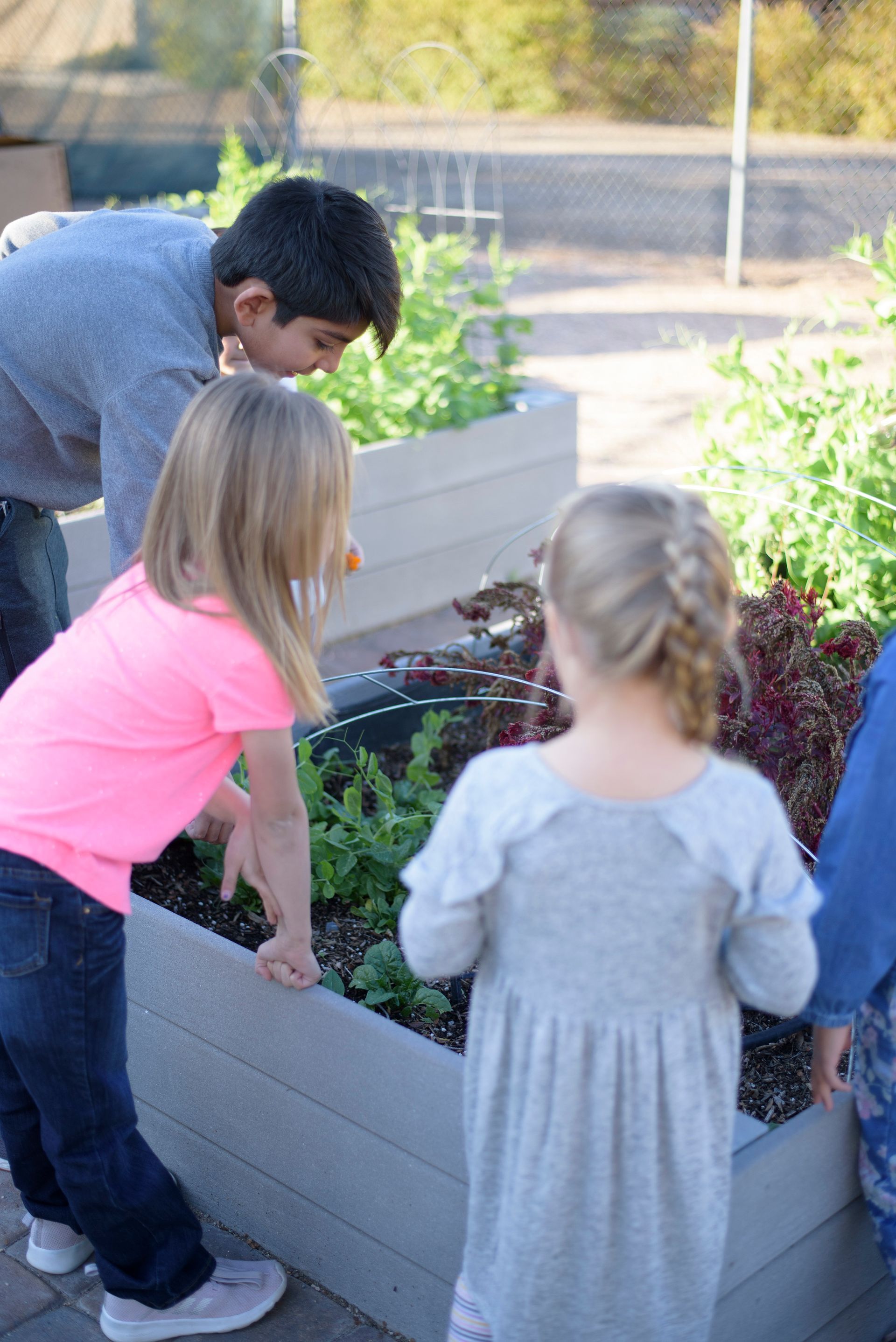
Our world is increasingly dominated by screens, indoor activities, and tightly packed schedules. Because of this shift, giving children daily opportunities to reconnect with nature has never been more vital for their healthy development.
Dr. Maria Montessori designed the prepared environment to foster independence, focus, and self-discovery. Every element inside a Montessori classroom is chosen with purpose. Outside the classroom walls, nature functions as the ultimate prepared environment—offering boundless opportunities for physical movement, emotional grounding, and social development.
The Social-Emotional Power of Outdoor Play
Humans are biologically wired to connect with the natural world. E.O. Wilson called this intrinsic human drive the biophilia hypothesis, and modern research consistently confirms what educators and parents observe every day: time spent outdoors directly lowers stress and builds resilience.
In a natural setting, children develop confidence through healthy risk assessment and physical self-discovery. Consider the simple act of navigating an unpaved trail or climbing a low tree branch. As children evaluate their footing, practice balance, and test their physical limits, they build genuine self-efficacy. They learn to trust their body's capabilities, process minor setbacks, and persevere through challenges.
Unstructured outdoor time also serves as a rich foundation for social development. Away from rigid structures, children engage in collaborative play—building structures from loose branches, sharing discoveries under a rock, or creating imaginative games. These moments require active communication, negotiation, and empathy as children navigate social dynamics with their peers.
How Nature Supports Self-Regulation
The natural world offers a unique sensory landscape that helps ground a child's nervous system. From the rhythmic sound of rustling leaves to the tactile experience of soil and rain, nature provides balanced sensory input without the overstimulation common to digital screens or crowded indoor spaces.
Many parents know the classic children’s story, When Sophie Gets Angry – Really, Really Angry by Molly Bang. When Sophie feels overwhelmed by strong emotions, she runs outside, climbs her favorite tree, and lets the wide, calm world comfort her until she finds her center.
When children listen to this story, they recognize that impulse instinctively. Nature provides space to breathe, release excess energy, and restore emotional balance. When a child is feeling overstimulated or frustrated, stepping outside for a brief walk or quiet observation often acts as a natural reset button.
Cultivating Stewardship and Inner Calm
By observing seasonal cycles, tending to plants, and watching local wildlife, children develop a profound appreciation for the living world around them. In his landmark book Last Child in the Woods, author Richard Louv coined the term "nature-deficit disorder" to describe the behavioral and emotional costs of isolating children from the outdoors. He reminds us that time in nature is not an extra luxury—it is essential for physical and mental health.
When children spend regular time outdoors, they develop:
- Focus and Cognitive Rest: Natural settings restore executive function and improve attention spans.
- Environmental Stewardship: Direct contact with plants and wildlife builds a lifelong respect for the environment.
- Emotional Grounding: Physical freedom outdoors releases tension and supports better sleep and calmer moods at home.
Bringing the Outdoors Into Daily Family Life
Prioritizing outdoor time does not require elaborate weekend trips. Simple, consistent daily habits make a significant impact:
- Embrace All Weather: Equip your child with simple rain boots or outdoor gear so weather becomes an invitation to explore rather than a barrier.
- Offer "Loose Parts" Play: Leave backyard play open-ended with sticks, stones, water, and soil rather than structured plastic play sets.
- Create a Daily Reset Routine: Take a 10-minute walk together at dusk, or sit outside for a morning snack to establish a calm daily rhythm.
At Crabapple Montessori School, outdoor exploration is an integral component of our daily routine. Our outdoor environments are designed to extend classroom learning, allowing children to move, observe, and engage with the natural world every day.
We warmly invite prospective and current families to
visit our campus, observe our indoor and outdoor prepared environments, and learn how our programs support your child's natural growth.